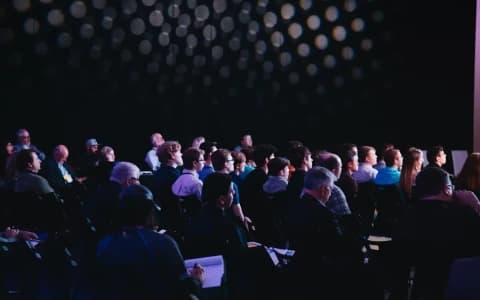
Every year, congress season can feel like an obstacle course: long days, packed schedules, last-minute curveballs, and the occasional sprint finish. It’s an intense whirlwind of adrenaline – and yet, when everything comes together, the effort feels entirely worthwhile.
TVF summer 2025
Over the summer, TVF teams criss-crossed the globe, taking part in more than ten congresses across Europe and North America. These were (take a deep breath):
SIOP Europe in Budapest (paediatric oncology); BSH in Glasgow (haematology); EMAS in Valencia (menopause and andropause); Lupus 2025 in Toronto (autoimmune disease); ESPGHAN and EASL in Helsinki and Amsterdam (hepatology); EHA in Milan (haematology and oncology) EULAR in Barcelona (rheumatology); EAACI in Glasgow (allergy and immunology); ASGCT in New Orleans (gene and cell therapy); and MGFA in The Hague (myasthenia gravis).
From building booths and running symposiums to writing presentations, creating posters, wrangling last-minute print changes, and marshalling couriers, we were in the thick of it – boots on the ground, clipboards (virtual or otherwise) in hand.
So here it is: our top ten tips for staying on top during congress season – from the fundamental and useful to the slightly absurd.
In no particular order...
1. Mind the (regulatory) gap
Different countries, different rules. From Budapest to New Orleans, we were again reminded how much regulatory requirements can vary depending on the market. That’s why it’s essential to engage local regulatory personnel as early as possible. Last-minute reviews close to the wire can slow things down – especially when feedback varies so much across markets (even on the same material). Early conversations, regular check-ins, and project trackers are essential to keeping things moving smoothly – especially when, as we’ve experienced, a late-breaking compliance update (think: revised QR codes and safety wording) lands just hours before materials go to print. Having the right processes in place means those surprises don’t turn into all-nighters.
2. Understand your audience – and be ready to pivot
When you’re deeply immersed in a rare disease account, it’s easy to forget that – despite your brilliant omnichannel campaign – many HCPs may still be unfamiliar with the condition. We applied this thinking when creating booth content for EAACI in Glasgow, leading with approachable disease awareness materials before introducing data. That shift made the content more accessible – and our industry client told us conversations with delegates were noticeably more fruitful and productive than in previous years.
3. Lock in speakers early…
Organising a symposium means juggling a lot: packed schedules, cross-border logistics, and multiple stakeholders with limited availability. For one session this year, we were still confirming speakers six weeks out from the symposium date – an unavoidable reality of coordinating with incredibly busy experts across time zones. Working closely with the client team, we brought together three excellent speakers and two collaborators, and got them fully briefed and prepped ahead of the session. It all ran smoothly on the day – and received a glowing review from the client. Still, getting commitments in early definitely helps take the pressure off.
4. …But don’t get locked in yourself
Agencies may occasionally face an all-nighter... and we narrowly avoided one at EULAR. Picture the scene. The end of a (very) long set-up day at the congress centre – booth screens installed, furniture in place, and apps all tested down to the last pixel. Our team was ready to head back to the hotel. One problem: the venue gates were locked. With no one in sight, we scouted the perimeter for another exit. No joy. Eventually, we tracked down a lone security guard finishing his shift, who mercifully gave us a lift out. The takeaway? Don’t just plan your build – plan your escape.
5. Even perfect proofs can’t prevent surprises
For one congress, we’d signed off a batch of symposium flyers after receiving a hard copy proof – everything looked spot on. But when the full set arrived on-site, several were marked with ink smudges. The printer explained that the damage likely happened during packing or transport before the ink had fully dried. While a reprint saved the day, it was a useful reminder: even when the print itself is flawless, it’s worth asking printers about their packing and handling processes – and being ready for the occasional curveball.
6. Build in buffer – then double it
At EMAS in Valencia, last-minute updates to QR codes and approved wording came in the day before a symposium. Luckily, we’d planned enough buffer time to absorb the changes and avoid chaos. At another congress, a booth wall was printed incorrectly, and a reprint was arranged to be flown in from the UK. It never arrived – the courier overslept and missed the flight. A rapid on-site fix – involving stickers – saved the day. In events of this scale, the unexpected is almost guaranteed. Moral of the story: even your backup plan needs a backup – and a Blue Peter–style emergency kit (scissors, glue, sticky‑backed plastic…) will never go amiss.
7. Amazon is not a logistics partner
At one congress, we ordered flyer holders to the exhibition centre’s designated loading dock – but Amazon delivered them to the hotel business centre instead. There, the hotel promptly held our parcels hostage. Cue us channelling our inner FBI negotiators – and paying the ransom (aka “handling fee”) – to get them released. As for the flyer holders… we’re still not entirely sure they ever made it to the booth. Lesson learned: use a courier. Which leads us to the next point…
8. Couriers *can* be your best friend
With the best will – and the best planning – in the world, things still go wrong. Which is why we now keep trusted couriers on speed dial in each city we’ve worked in. At multiple congresses this season, our go-to couriers came through: delivering overnight, playing detective inside venues to track down clients, and carefully guarding boxes of flyers as if they were newborn babies.
9. Little things make a big difference
At several booths this year, we were reminded how eagle eyes are needed or else small details can trip you up. Think: coffee machines or furniture blocking key content, low-resolution print materials, slightly misaligned logos – it all adds up. One unnoticed detail can overshadow everything else. There’s no substitute for being on-site to check every tiny thing is just as it should be.
10. Go the extra mile (literally, if needed)
When one UK reviewer made a last-minute request for hard copies of printed materials, it was clear they’d never get a normal shipment in time (even using one of our trusty couriers). So one of the TVF team personally delivered the materials to their house in Hampstead, north London. Doorstep sign-off? That’s service!
Final thoughts
The 2025 congress season reminded us of just how much these events rely on creativity, coordination, quick thinking – and a lot of goodwill on all sides. Behind every polished presentation is a team juggling timelines, stakeholders, and the occasional unexpected twist. But when the hard work pays off, it brings a real sense of satisfaction. Here’s to doing it all again next year.
By Peter Kelly