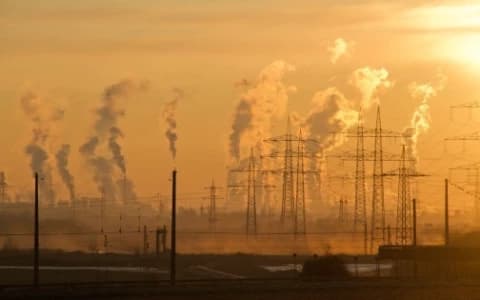
As climate change continues to threaten life as we know it, scientists in Tokyo have developed one of the most promising methods of reducing carbon dioxide known to date.
“Time is running out.” The stark words of warning given by Sir David Attenborough as he addressed the United Nations climate talk in Poland. He was, of course, referring to climate change: “our greatest threat in thousands of years.”
With ice-caps melting, sea levels rising, and freak weather incidents becoming increasingly common, the quest to combat climate change’s impending devastation is more pressing than ever. However, scientists in Tokyo may have now developed the most promising method of reducing carbon dioxide to date: a leap forward in the fight against climate change.
What is climate change?
Planet earth is blanketed by a concoction of substances, consisting of water vapour, carbon dioxide, methane and nitrous oxide: otherwise known as greenhouse gases. As sunlight reaches earth, it is bounced off the planet’s surface, and is re-emitted back into the atmosphere in the form of infrared heat. Unlike other atmospheric gases, such as oxygen and nitrogen, greenhouse gases have vibrational modes that allow them to absorb this heat, and later emit it back to the Earth’s surface, causing the Earth to warm.
For millennia, this process has maintained an equilibrium of emission and absorption, allowing the Earth to remain at a constant, life-supporting temperature. However, since the industrial revolution, human activity has drastically increased the concentration of these greenhouse gases, particularly carbon dioxide (CO2), which has increased by over a third in this time.This allows for more heat to be trapped within the Earth’s atmosphere.
Since 1880, global temperatures have risen by 1.8⁰C, and it is now agreed by 97% of scientists that the release of greenhouse gases, caused by human activity, is the primary cause of climate change; with CO2 being the most abundant and having the most heat trapping ability of all human-influenced climate change drivers.
Now, as Attenborough stated, “we are facing a man-made disaster of global scale,” which could result in “the collapse of our civilisations and the extinction of much of the natural world.”
A new hope?
Although the prospect of combating climate change is bleak, scientists around the world have taken up a call to arms to fight this devastating prospect, with a number of researchers achieving promising results. Once such example is that of a group of chemical researchers at the Tokyo Institute of Technology, who have designed a method of reducing CO2 based on commonly occurring elements.
Published in the Journal of the American Chemical Society, Osamu Ishitani and colleagues have reported the development of a photocatalytic system that could be capable of imitating photosynthesis: the process by which plants convert CO2 into energy.
Photocatalysts work by catalysing the multi-electron reduction of CO2 into carbon monoxide (CO) and water (H2O) (as seen in equations 1–3), resulting in less environmentally-damaging chemicals (which can be used to produce energy) and the reduction of atmospheric greenhouse gases.
- CO2 + e- → CO2
- CO2 + 2e- + 2H+ → HCO2H
- CO2 + 2e- + 2H+ → CO + H2O
Although multiple photocatalytic systems have been previously developed, Ishitani and colleagues have achieved a 57% overall quantum yield of CO2 reduction products: making it the highest performing system of this kind to date. In addition to this, many previous systems have used noble- or rare-metal complexes, whereas this new system uses more abundant, and much cheaper, copper- and manganese-based complexes, creating the possibility of an efficient and cost-effective method of carbon capture.
Although this technology is still young, the hope of reducing global carbon concentrations, whilst tackling the shortage of energy resources, has excited scientists and continues to show how incremental advances in chemistry can be used to help contribute to solving global issues.
Time may be running out on climate change, but there is still hope yet.